

Application of Functional Material Technology
Tailor made solutions for customers and create more innovative products for them
1. Release agent In the pultrusion molding process, the release agent is a must, and the internal release agent is generally used: there are liquid, paste, paste, and powder internal release agents. The commonly used internal release agents are metal soaps, fatty acid esters and olefin waxes. The basic requirement is that the internal release agent is compatible with the resin matrix, and has little impact on the physical properties of composite products. This compatibility depends on the melting point and molecular structure of the internal release agent, as well as the degree of physical mixing. The dosage of release agent is very small, generally 0.5%~3%, but it plays a large role. The quality of the demoulding effect directly affects the quality of the product. If the dosage is too large, it will adversely affect the strength of the product and make the surface rough, so the amount of internal release agent should be selected according to different resin formulations and mold conditions.
2. Flame retardant Composite materials with resin as the matrix contain a large number of organic compounds and have a certain degree of flammability. When pultrusion products have flame retardant requirements, the selection of flame retardants is indispensable. Flame retardants are a class of additives that can prevent polymeric materials from igniting or inhibit flame spread, usually compounds of phosphorus, bromine, chlorine, antimony and aluminum, of which aluminum hydroxide is one of the widely used flame retardants. Flame retardants can be divided into two categories: additive and reactive according to the method of use. Additive flame retardants mainly include phosphate esters, halogenated hydrocarbons, aluminum hydroxide and antimony oxide, etc., which are incorporated into the processing process of composite materials, which are easy to use and use in large quantities, which have a certain impact on the performance of composite materials. Reactive flame retardants are added to the polymerization system as a raw material monomer in the polymer preparation process, so that they are compounded to the polymer molecular chain through chemical reactions, so they have little impact on the properties of composite materials and have long-lasting flame retardancy. Reactive flame retardants mainly include phosphorus-containing polyols and halogenated anhydrides.
3. Filler The purpose of adding filler is to improve the processability of the resin, improve the performance of the product and reduce the cost. There are many types of fillers with different properties. In general, most inorganic fillers can improve mechanical strength and hardness, reduce product shrinkage, increase heat resistance, self-extinguishing, increase the viscosity of resin and reduce fluidity, while water resistance and chemical resistance may decrease. The commonly used fillers are powder fillers, and their particle size is about 150~1200 mesh. At present, calcium carbonate and aluminum hydroxide are commonly used, the price is low, and the dosage can be 10%~50% of the resin.
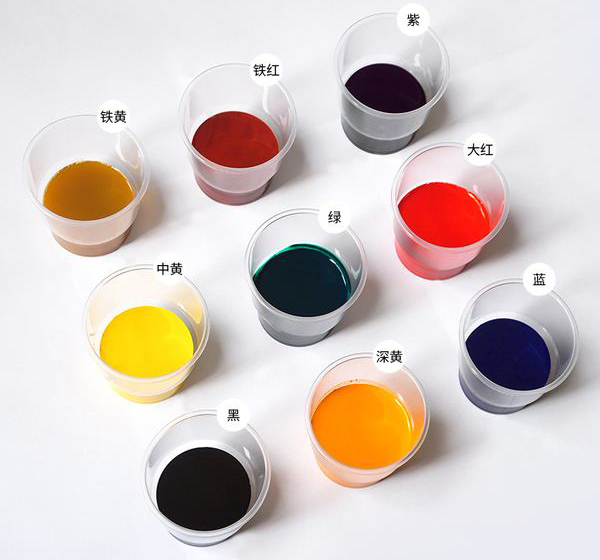
4. Pigment (color paste) In order to make the appearance of FRP products beautiful, pigments are usually added to the material. There are two types of coloring methods: inner coloring and outer coloring. In the pultrusion process, pigments are mixed into the resin system (usually inorganic colors, the amount is 0.5%~5%, and some products will use high-performance organic pigments, between 0.2% and 2%), and the external coloring method is generally not used. Note: In order to make the color of FRP products uniform, when using pigments, the pigments are generally dissolved or mixed in the cross-linking agent to prepare a solution or paste of a certain concentration. When using, add the pigment to the resin quantitatively as required to achieve the desired effect, otherwise it is very difficult. In particular, it is recommended to use a special color paste for pultrusion profiles for better molding results.
5. Low shrinkage additives In the pultrusion process, unsaturated polyester is widely used in the production of composite products. Its disadvantage is that it will produce a large volume shrinkage and release a lot of heat during curing, which makes the product prone to warping and cracking, and the selection of low shrinkage agent is particularly important to make the product meet the requirements of high surface flatness and finish. Low shrinkage additive is a thermoplastic material, which is made by dissolving saturated resin in styrene, and is generally used as a non-reactive additive for unsaturated polyester resin and vinyl ester resin. Common low-shrinkage additives include: polyvinyl acetate (PVAC), polymethyl methacrylate (PMMA), polystyrene (PSt), thermoplastic polyurethane, and polyester. The correct selection of low shrinkage agent can effectively reduce various defects caused by thermal shrinkage in the molding process of pultrusion products, such as warpage deformation, surface ripples, local cracks, glass fiber traces, surface matteness, dimensional instability, etc. At the same time, the addition of low-shrinkage additives also needs to consider the matching with the matrix resin and the impact on the curing time of the product.
6. Dispersant (polymer wetting agent) Dispersant is a surfactant, which is an additive to improve and improve the dispersion performance of fillers, color pastes and low shrinkage in glue, which is composed of one or more groups of affinity/filler and a resin-like chain structure. It enhances the wetting of pigment/filler particles while stabilizing the dispersion and preventing the glue from flocculating. The dispersant should have the following characteristics: 1. It has strong dispersion performance, which can effectively prevent the aggregation of filler particles from each other; 2. It has appropriate compatibility with resins and fillers; 3. Good thermal stability; 4. Good liquidity; 5. No color drift; 6. It does not affect the performance of the product; 7. Non-toxic wetting and dispersing agent should be added to the resin before the color/filler, and the addition amount is generally 0.5~1.5% based on the color/filler, in order to make the wetting and dispersing agent play an effect, when configuring the glue, a high-speed mixer should be used to stir and increase the shear force. And it can improve the wettability of the powder in the substrate to improve the overall comprehensive physical properties.
7. Initiator The initiator is the basic and important component in the pultrusion process formulation. The presence of initiator can activate the double bond contained in the matrix resin or crosslinker, so that the chain polymerization reaction can occur and become a bulk molecule with a network structure. By reasonably selecting the type of initiator and adjusting the amount of initiator, the reaction speed can be effectively controlled, so that the product can meet the requirements of the curing process and obtain a product with stable quality. In the pultrusion process, initiators of medium and high temperature curing systems are generally used, and the more common ones are BPO, MEKP, TBPB, BBPD, etc. In the actual pultrusion production, the combination of high-temperature initiator and high-temperature initiator with large activity to form two or more composite initiator systems has been widely used in the pultrusion process. The reasonable combination of initiators can make the unsaturated polyester resin glue not only have a long application life, but also can gel and cure quickly. The initiator is flammable and explosive dangerous goods, and has an irritating effect on the human respiratory tract, skin, eyes, etc., and safety rules should be strictly observed in the process of production, storage and use. Whenever possible, choose to store separately.

Mr. Jia: 159-1691-0100 13360650502 Mr. Jiang:13924940045
Email:denson168@163.com
Address: Room 101, No. 1, Lane 11, Changsheng Street, Dalian Tang, Wanjiang Street, Dongguan City, Guangdong Province

备案号:粤ICP备19036602号 粤公网安备 44190002005999号 Copyright Dongguan DENSON New Materials Co., Ltd
